
The Formorphology Lab at Rutgers University

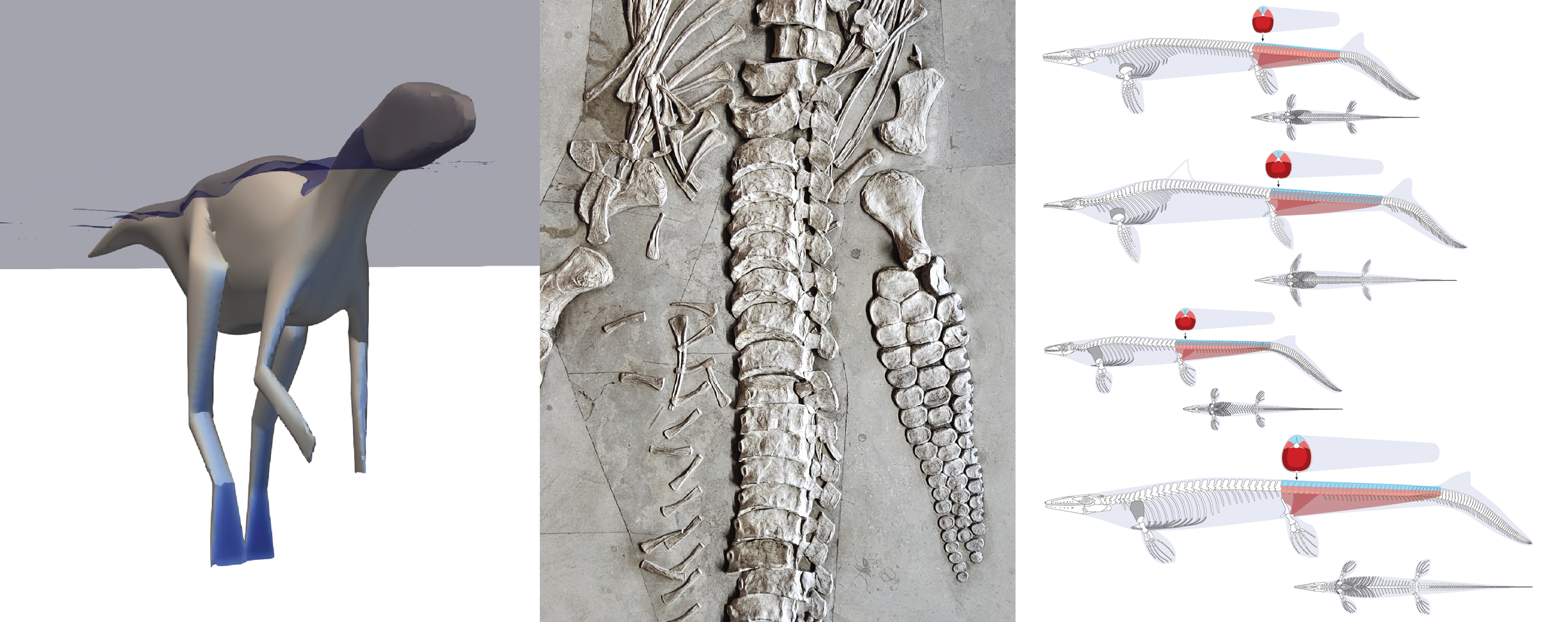
Exploring the Functional and Morphological Drivers of Major Evolutionary Transformations
Research
Major Transformations in vertebrates are among the most dramatic displays of macroevolutionary processes, and we are privileged to observe these fascinating progressions in various forms throughout the fossil record.
Lensed through the land-to-sea transition, the Formorphology Lab explores the functional morphological underpinnings and controls of Major Evolutionary Transformations. Given an organism’s form and function, why do clades evolve into new environments, and why do they proceed in their respective trajectories? How do they function in these new environments? We explore these questions, and others, primarily from a postcranial perspective to glean insights into these large-scale evolutionary processes. Using morphology, biomechanics, comparative anatomy, phylogenetics, computational fluid dynamics, kinematics, and more, the Formorphology Lab is excited to investigate the biological mechanisms behind the exciting evolutionary stories!
Explore
-
Why do some clades evolve into aquatic environments and not others? Using insights from vertebrate morphology, biomechanics, locomotion, and computational fluid dynamics we explore the factors that facilitate and constrain these transformations.
-
Once in an aquatic environment, how do animals locomote? Kinematics, muscle reconstructions, range of motion studies and more can help us understand the performance of extinct secondarily aquatic animals for which limited or no modern analogs exist. This provides insights into the evolution of aquatic movement, and the diversity of movement in vertebrates throughout time.
-
The Western Interior Seaway, a great shallow sea that divided North American into two landmasses, has accessible formations across the interior of the United States and Canada. They contain numerous, often highly complete marine reptile fossils. Specimens that are ripe for both functional and phylogenetic analyses. We are interested in exploring new field sites that could provide insights into the evolution of mosasaurs.
-
The Formorphology Lab, currently under construction, will be in Rutgers’ Foran Hall, a large building primarily dedicated to lab facilities. Our lab will have a small wet lab space with a fridge and freezer, intended for anatomical dissection specimens, as well as a protected inner room with two high-power gaming desktops, a Wacom tablet, 3D printer, and collections cabinets for comparative osteological specimens.
-
New Jersey, through numerous local airports (Newark, JFK, La Guardia, Philly) and the Northeast Corridor Rail Line, has great domestic and international access to institutions for data collection and collaboration. Additionally, the Formorphology Lab has a close relationship with the American Museum of Natural History in Manhattan, and the Natural History Museum of Los Angeles County.
The Team
Kiersten Formoso
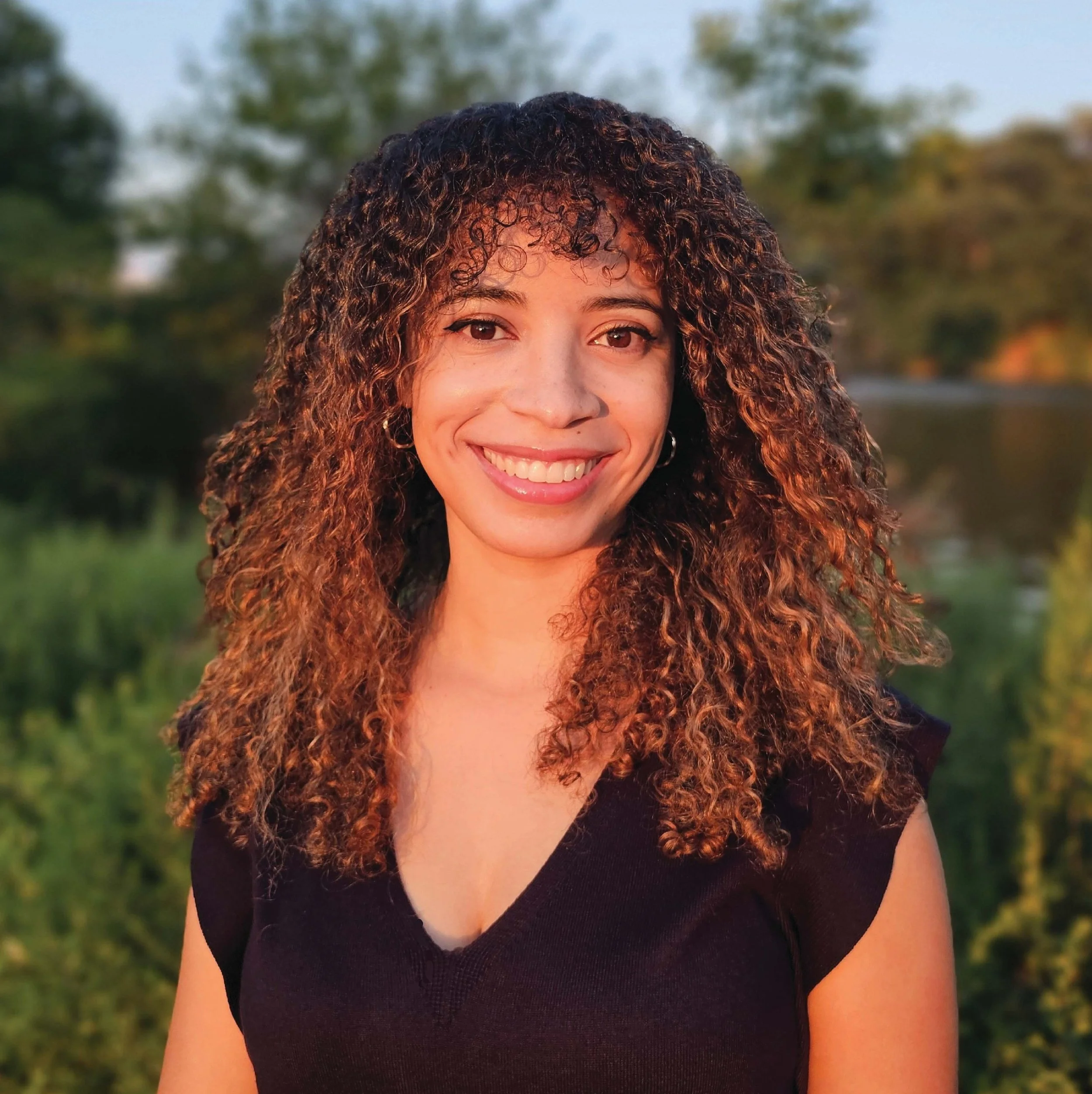
Principal Investigator
Kiersten Formoso is an Assistant Professor in the Department of Ecology, Evolution, and Natural Resources (DEENR) at Rutgers University, her undergraduate Alma Mater, and a Research Associate at the American Museum of Natural History. After graduating with a B.Sc. in DEENR in 2016, she spent time with the Paleobiology & Geobiology Research Group at Virginia Tech, then went on to complete her Ph.D. in Geological Sciences at the University of Southern California in Los Angeles. Kiersten was a Presidential Postdoc at Rutgers before successfully transitioning to faculty.
TBD

Future Postdoc
Interested in joining the Formorphology Lab? We are hiring a 3-year postdoc to start in January 2027. Please fill out the Google Form below if interested!
Maia Klarin
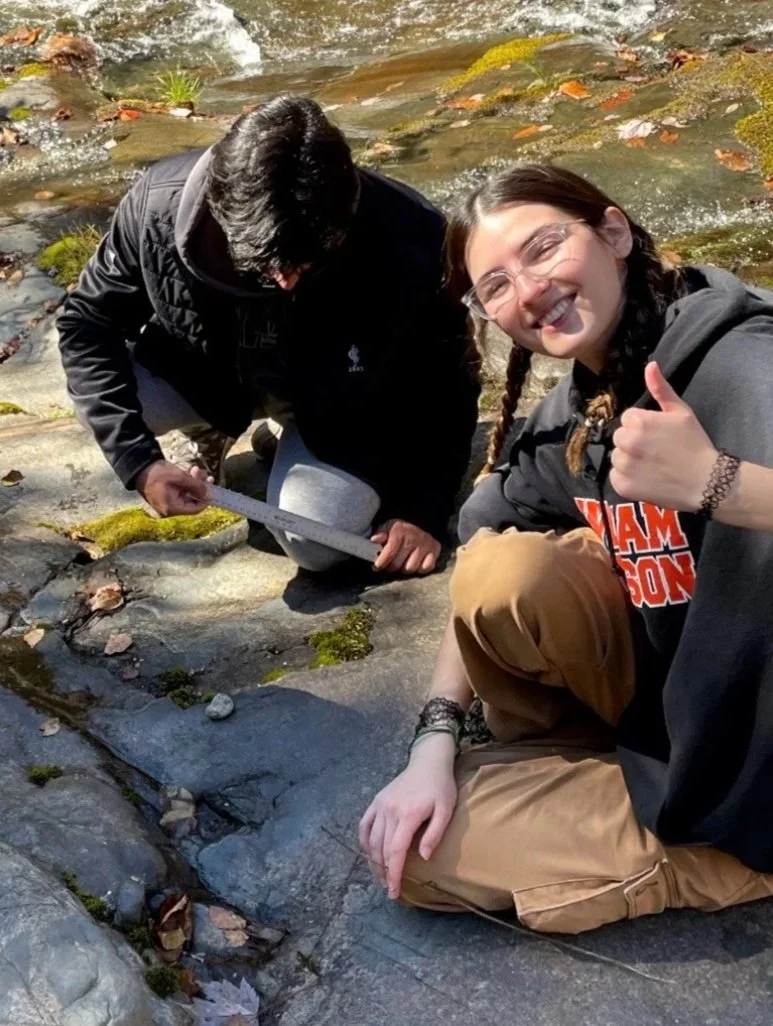
Lab Alumna: Master’s Student
Maia Klarin defended her Master’s in Earth and Planetary Sciences (EPS) in October 2026! Her Master’s thesis explored how trunk and tail morphology correlates with swimming style in semi-aquatic amniotes and will be submitted for publication within the year!
Lab News
New pub
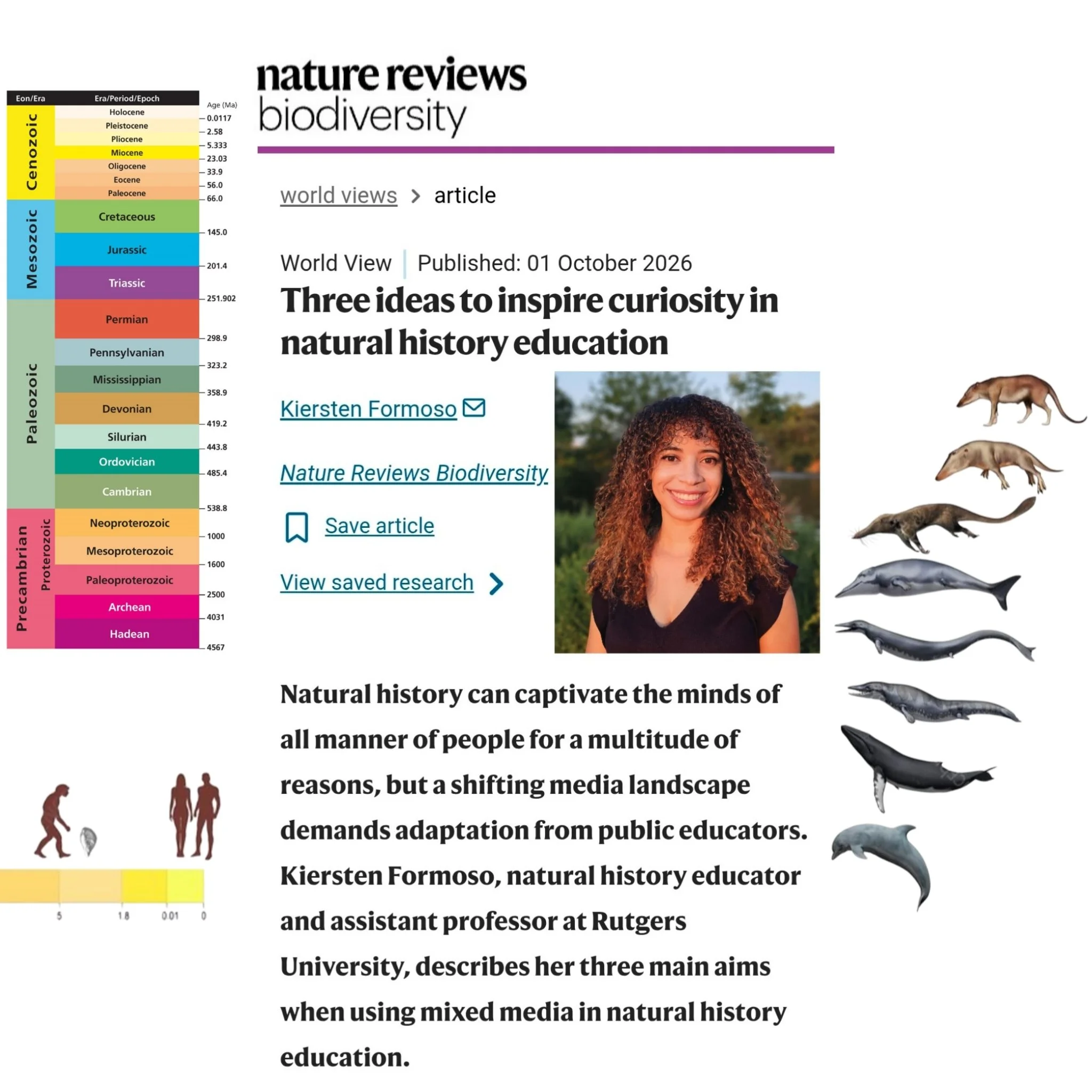
Kiersten published an invited World View in Nature Reviews Biodiversity. Read for free at this special view only link.
Maia defended!
Maia defended her Master’s thesis and graduated! Yay for Maia! The Formorphology Lab’s first alumna.
Publications
Formoso, K. Three ideas to inspire curiosity in natural history education. Nat. Rev. Biodivers. (2026). https://doi.org/10.1038/s44358-026-00211-8
Alison T. Cribb, Kiersten K. Formoso, C. Henrik Woolley, James Beech, Shannon Brophy, Paul Byrne, Victoria C. Cassady, Amanda L. Godbold, Ekaterina Larina, Philip-Peter Maxeiner, Yun-Hsin Wu, Frank A. Corsetti and David J. Bottjer. Contrasting terrestrial and marine ecospace dynamics after the end-Triassic mass extinction event. (2023). Proceedings B. https://doi.org/10.1098/rspb.2023.2232
Kiersten K. Formoso, Michael B. Habib, Jorge Velez-Juarbe. The role of locomotory ancestry on secondarily aquatic transitions. Integrative and Comparative Biology. (2023). https://doi.org/10.1093/icb/icad112
Paul C. Sereno, Nathan Myhrvold, Donald M. Henderson, Frank E. Fish, Daniel Vidal, Stephanie L. Baumgart, Tyler M. Keillor, Kiersten K. Formoso, Lauren L. Conroy. Spinosaurus is not an aquatic dinosaur. eLife. (2022). https://doi.org/10.7554/eLife.80092
Griffin, C.T., Stocker, M.R., Colleary, C., Stefanic, C.M., Lessner, E.J., Riegler, M., Formoso, K., Koeller, K. and Nesbitt, S.J. Assessing ontogenetic maturity in extinct saurian reptiles. Biology Reviews (2021). https://doi.org/10.1111/brv.12666
Formoso, Kiersten K., Nesbitt, Sterling J., Pritchard, Adam C., Stocker, Michelle R., and Parker, William G. A long-necked tanystropheid from the Middle Triassic Moenkopi Formation (Anisian) provides insights into the ecology and biogeography of tanystropheids. Palaeontologia Electronica. (2019). https://doi.org/10.26879/988 palaeo-electronica.org/content/2019/2824-long-necked-moenkopi-tanystropheid